Written years ago,
This is Ron Howell’s account of how it all began . .
When I was asked to tell about how the first two conferences came about in Sacramento, California in 1973 and 1974, I felt it important to go back prior to the first conference and tell how it came about because it was then that the spirit of I.A.B.T.I. was born.
The Beginning
Understanding The Need
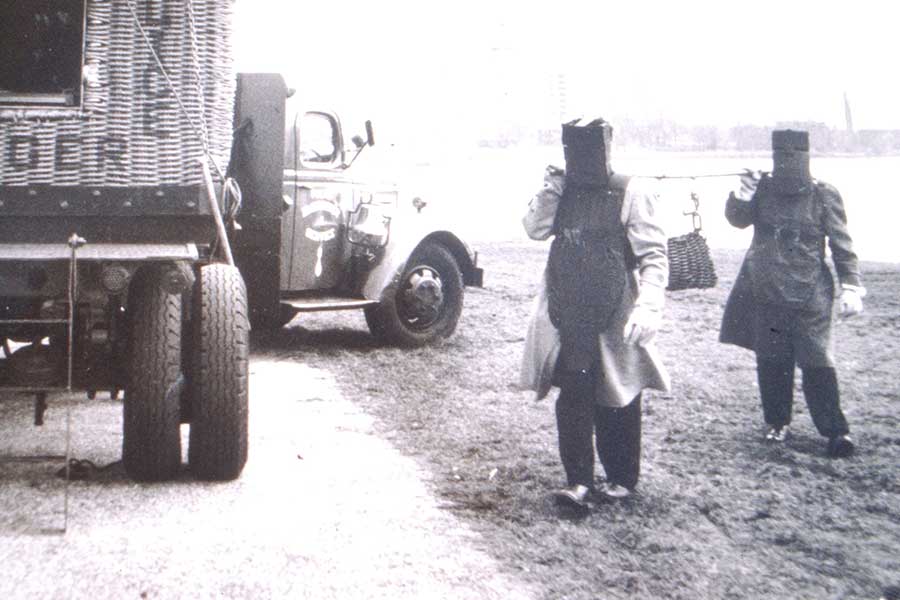
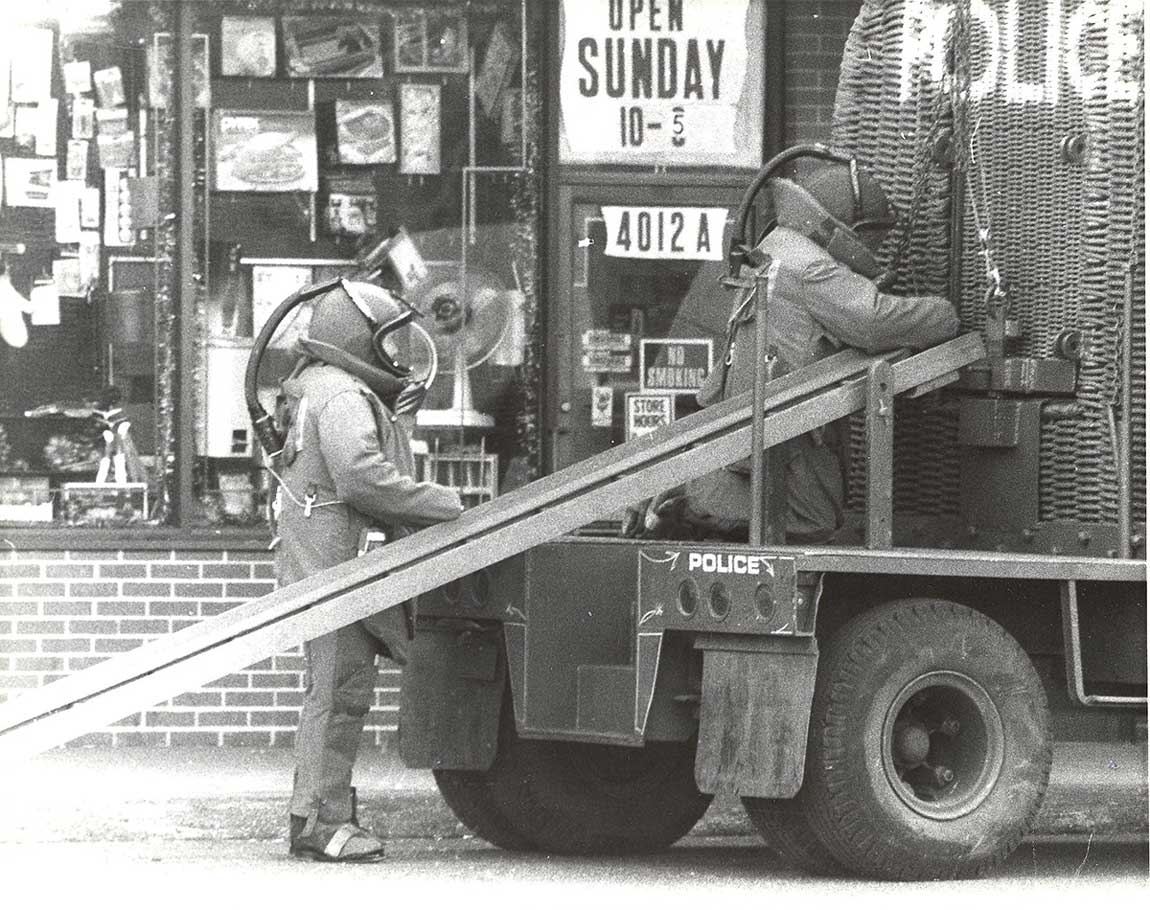
It was at about this point in time, late 1960’s and early 1970’s, that the anti-war demonstrations and acts of violence were beginning to escalate. Sacraments had its share of problems, “want-a-be” type situations, but the Bay Area demonstration problems far exceeded ours. Though the activity in the Sacramento area was below the level in other major areas, the violence we did experience got the attention of the law enforcement community and State governmental agencies. The number of bomb and explosives-related incidents began to increase; i.e. in 1967, we handled a grand total of sic (6) incidents, in 1968 we handled thirty-two (32) incidents. By 1970, the bomb explosives-related calls increased to fifty-six (56). While these are not large numbers by today’s standards (in the month of July, 1992, the Sacramento Area EOD Unit responded to fifty-two bomb calls), in those days, we did not have trained technicians and the specialized equipment that we have today to handle calls. Also, the area population was one-fourth what it is today. Having the nearest military EOD Unit two hours away, the majority of incidents were handled by law enforcement personnel, with very limited training. There were many times during the winter months when due to heavy fog we had to wait until the following day before the military EOD unit could respond. On critical bomb calls, they responded in the fog, which caused a three or four delay.
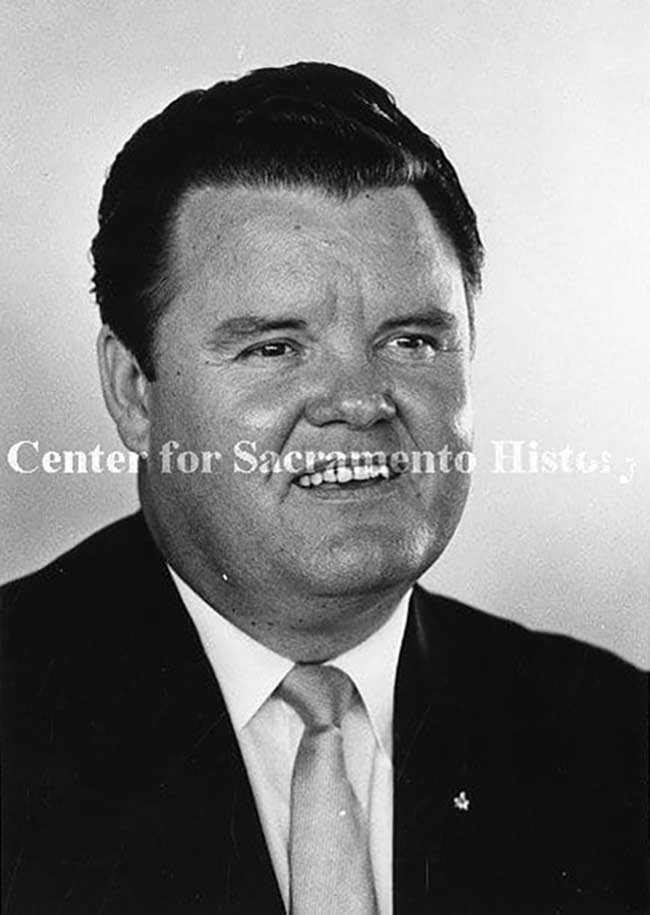
When Duane Lowe took office in January 1970, he completely reorganized the department, similar to how the Los Angeles County Sheriff’s Department was structured. The reorganization resulted in the Detective Division to be reorganized into special details, one being an Arson/Explosives Detail. So, having worked with Lowe on arson investigations previously, he told me of the new unit and asked if I would like to be a part of the new detail. Since I was working arson’s anyway, I told Lowe that I would not mind working arson part, but I was not sure about the explosives part. Lowe then assured me that “I will see to it that you and your partner get all the necessary training.” After telling Lowe that I would work the detail, he assigned another detective, Inspector William Ravenscroft (now retired), to be my partner. However, after about eight months Ravenscroft decided explosives were not for him and requested to be assigned to another detail.
During those first months, Sheriff Lowe made good on his promise to get us some explosives training. At that time, the only people with experience with explosives was the military. My partner and I were provided a detail car, 1968 Plymouth, given a gas credit card, and told to go find out who would be willing to share explosives training. Armed with our car and credit card, Ravenscroft and I set about contacting the various military units. Our travels took us from the Presidio, to the USMC Camp Pendleton, to San Diego. All the military EOD units were extremely cooperative. I recall the US MC Pendleton EOD unit could not believe we had traveled that far, so they took time out and provided us with two days of training on explosives, military ordnance, and booby-traps. We had known that the Los Angeles Police Department and Los Angeles County Sheriff’s Department had explosives units, and the San Diego Fire/Sheriff bomb squad. So, we proceeded to San Diego and contacted the San Diego Fire Department and San Diego County Sheriff’s Department. We had heard that the San Diego Fire Department had built and tested one bomb trailer and were just completing a second trailer. We were seeking ideas and sources for specialized equipment. Up to this point, we had found that there was virtually no specialized equipment available for civilian bomb squads. We also found during our travels that there was no established training or information exchange among military and civilian law-enforcement. We found the exchange of EOD related information was limited to certain agencies and anyone outside their respective areas was isolated from that information.
The only training available in explosives was from military EOD units and a local FBI agent, Special Agent Cliff B. Harriman (now retired). There were no specialized schools for law enforcement personnel. Harriman was conducting special in-service training in explosives recognition to local law enforcement.
It is important to explain how that training session in 1971 came about because it was there that interest was expressed in a future training conference, which eventually led to the first national EOD conference being held.
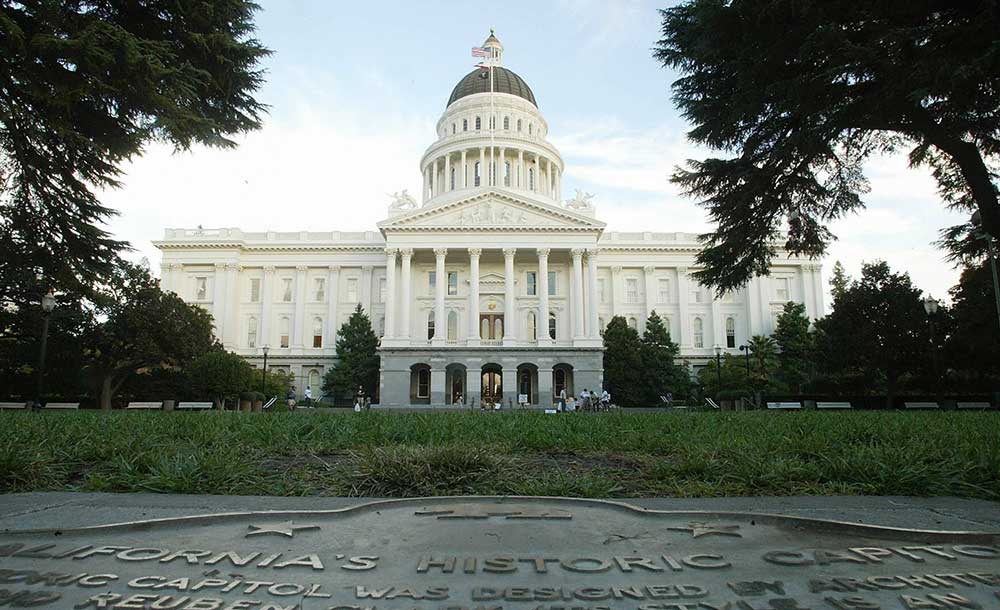
One of reasons we met at the Capital Was that Wooten was a Sergeant at Arms and we were able to Meet in the Senate and Assembly coffee room, where fresh coffee and donuts were usually available. It was at one of these unit meanings that we were talking about San Diego not being able to come to Sacramento for presentation. Usually present at these meetings was Wooten’s boss, Chief Sgt. at Arms Tony Beard, Senior, who would always greet and introduce the Assembly/Senate members who happen to stop by for coffee and donuts. When Tony Beard heard of our funding problem, he said, “I think I know someone who can help.” Tony Beard picked up the telephone, called the senator and said “Jack, come up to my office. I’ve got something here I believe you can handle.” Shortly thereafter, Sen. Jack Schrade from San Diego walked in. After telling Sen. Schrade about the training and who was to conduct it, Sen. Schrade said “when do you want them here?” As a result, the entire San Diego Fire/Sheriff Bomb Unit, along with their training aids, were flown to Sacramento. They not only conducted the one-day training session at the Sacramento County Sheriff’s Department, they repeated the same training for the California State Capitol Sgt. at Arms, California State Police, and other invited law enforcement personnel over at the Capitol building.
It was in the latter part of 1971 that my partner (Inspector Ravenscroft) decided he did not care to continue dealing with explosives and explosive devices, so he asked for a transfer to another detail. Replacing him as my new partner was Inspector Tom McGill, who readily admitted that he knew little about explosives and explosive devices, but was willing to learn. With McGill is my new partner; we continue to look for some type of organized training and specialized equipment for handling explosives. We found that L. E. A. A. was trying to get a Hazardous Devices School started at Redstone Arsenal, Huntsville, Alabama. During our contract with Wayne Burnett, Project Specialist with L. E. A. A. at the time, we learned about our grant funds available under the provisions of the Omnibus Crime Control and Safe Streets Act of 1968 (PL 90 – 351).
The Grant
The Need For Funding
During 1971, Inspector McGill and I had traveled to and made personal contact with each and every law-enforcement agency in O. C. J. P.’s (Office of Criminal Justice Planning) Region D of California, which includes 20 cities and eight counties surrounding Sacramento.
As we proceeded with the grant, we soon found this was the first grant of this type anywhere, which made it more exciting because we were going for something no one else had yet tried. So here we were, two Sheriff’s Deputies taking on the bombing problems and training for eight counties and 20 cities in California. Inspector McGill was the Grant Project Director and I was the Grant Assistant Project Director. This being the first grant of its kind, we were obviously apprehensive about its success.
If you’re wondering what all this has to do with the IABTI, just bear with me because you will see how the grant and its objectives had a direct bearing on how the first two conferences came about. It was during the preparation of the EOD grant that the intent for EOD training began to grow and develop toward a “conference.” The following is the grant project summary: as the bombing incidents increase throughout the nation, California funds itself receiving the major share of these incidents. No longer can civilian law-enforcement agencies shrug off the responsibility by relying completely on military EOD Units to solve these bombing problems for them. However, extremely high cost of the highly specialized training and equipment that is required makes it prohibitive for even some of the larger police agencies to assume this burden on an individual basis. Obviously, the answer lies in the cooperative arrangement among several agencies.
This need to cooperate and pull resources was made evident by the overwhelming response that this concept received from the law enforcement agencies contacted throughout the eight counties of Region D. And, recognizing the gravity of this problem may cause this to be the first time that law enforcement agencies ALL EIGHT COUNTIES OF REGION D have banded together in unison to solve a common problem.
To solve this problem, eight key objectives were developed along with the sound evaluation system to ensure their achievement. Several of these objectives consist of innovative aspects. Combined, they provide a prototype project that can later be used as a guide by other law enforcement agencies desiring to combine their efforts in solving the serious bombing and explosive incident problem.
I have attached as part of the IABTI history copy of the grant. Also included is a copy of the first year’s grant monitoring report, which lists the project objectives. In Part B Project Personnel it outlines how we were able to use grant monies to pay for the conference speakers expenses. Also, the last paragraph of section C reflects that “this conference has resulted in an International Association of EOD Technicians being formed.”
In 1972, after the grant was approved on October 1, 1972, I recall sitting in the Arson/Explosives Detail office with McGill, trying to figure out how we could satisfy some of the grant training objectives, when we decided to go ahead with the possibility of holding a “National EOD Conference.” We first contacted other nearby bomb units, including San Francisco Police Department Inspectors Don Hansen and Russ Ahlgrim. Everyone contacted thought it was a good idea and gave their support. We then contacted Sheriff Lowe, who liked the idea and gave his full support, along with any resources needed from the entire Sheriff’s Department.
Getting Everyone Together
The First Conference
As soon as the conference states were set, McGill and I began the task of preparing mail-out notification/announcements. It seemed like we mailed an announcement to every police, Sheriff, fire, and federal agency in the United States. We even sent announcements to the Royal Canadian Mounted Police. We had obtained a list of agencies from the International Association of Police Chiefs for the conference mailings.
Having attended the Hazardous Devices School in Redstone in February 1972, I felt I could call upon the school personnel to help get the word out about the conference. A special thanks should go to Major Ralph O. Ekonen, USAR (retired), Major Sterlyning Parish, and Staff Sgt. Norman J. McCain for their help.
When we contacted the various speakers, we encountered another problem with “sensitive” material being disseminated to the “non-technicians.” As a result, and upon the speakers’ requests, some presentations were “restricted” to technicians only. However, we had to provide the non-technicians with information also, so we had to hold a simultaneous non-restricted presentation.
To resolve the confusion as to who the technicians and non-technicians were, we made the photo identification background red for technicians and blue for non-technicians. At the first EOD conference, you could not attend the “restricted” presentations unless you were a bomb technician. We resolve this by the next conference by making all the presentations available to all attendees, whether they were technicians or investigators.
The presentations at the first conference consisted mainly of “new” programs for dissemination of information and available training. We had excellent cooperation and support from both the FBI and US Treasury Alcohol, Tobacco and Firearms. The FBI had just acquired the National Bomb Data Center in June, 1972, the conference gave Mr. Gib McNeely, FBI, an opportunity to present the N. B. D. C.’s objectives and plans.
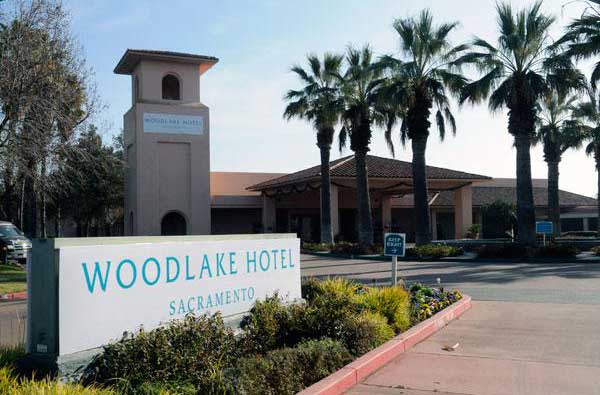
Another memorable presentation was made by Fred P. Smith, Unit Chief in Charge of Explosives, FBI lab, Washington DC. Fred Smith began his presentation by telling about the most “terrifying” experience he had the previous night. As the story goes, it seems some ducks, whose current home was the pond at the Woodlake Inn, had wandered into a hotel room for the night rather than spending it by the pond. As it happened, that same room had been reserved for Fred Smith. What took place when Fred returned to the hotel room is a tale only Fred could tell. Fred’s fondness for ducks thus began, in the incident has become part of IABTI’s folklore.
The First National EOD conference was a total success and there was a lot of interest among the conferees to hold another such conference in 1974. But, where? So, McGill and I decided to see if Sheriff Lowe would be willing to host another national conference.
During the first conference, all the conferees expressed a desire to establish some type of a formal explosives organization. So, at the conclusion of that first conference, a “Committee to Form a National Association” was established, within Inspector Tom McGill of the Sacramento County Sheriff’s Department as the chairman of the committee and Inspector Don Hansen of the San Francisco Police Department as the Secretary.
There were 15 original committee members from all over the United States and Canada. Some of those members listed in the First EOD Conference transcript were replaced, and new Committee members were added. There were many committee meetings that resulted in very lively discussions and debates.
Before the first conference had concluded, the conferees voted their unanimous approval for a formal organization, and for a “Second EOD Conference” in 1974 to be held in Sacramento, California.
The Logo
The Second Conference
Just prior to the 1974 conference, the FBI-NBDC held a seminar at the FBI Academy in Quantico, Virginia. Participants were invited from the United States, England, and other countries. Inspector McGill was invited by Mr. Gibb McNeely, FBI-NBDC to attend the seminar. The timing was perfect because the international participants at the FBI seminar were able through advanced contact to extend their stay and to be speakers for our second conference. We were able to get permission from our grant project representatives to use grant funds for the various speaker’s travel and accommodations. Being able to secure that vast array of notable and distinguished speakers certainly enhance the conference program. I’ve submitted a copy of the second conference program and you can see the scope and variety of topics presented.

At the conclusion of the second conference, a transcript like the one at the first conference was not provided; however, copies of the audiotape presentations were made available to the conferees at a nominal fee.
Creating a Name
The Association
During that first business meeting on Friday, March 22, 1974, election of officers for the new Association was held. Nominations were made from the floor and later voted on. Since Tom McGill had been Chairman of the Formation Committee, his name was considered for Director. However, when McGill was asked to run for the position, he was very adamant and vocal as to why he should not run. McGill felt he had already served as a director since he had served as Chairman of the Formation Committee and Logo Committee, and he felt someone else should be the International Director. Russ Ahlgrim looked at me and said “how about you?” I told Ahlgrim thanks, but no thanks. I also told Ahlgrim about Jim Wooten’s contributions to the Formation Committee, his background and qualifications. Thus, the campaigning began for Jim Wooten to become International Director. When asked if he would consider being the International Director, Wooten was at first reluctant to say yes because he felt McGill should run for the office. Finally, when it was clear to Wooten that McGill did not desire the position, Wooten agreed to let his name be placed into nomination, along with others. Wooten tried to get me to run; however, I told him I did not have the time to properly devote to IABTI due to my current involvement with the major three-year grant project. Wooten was told he would get any and all the support he needed during his directorship. Thus, the name of James T. “Jim” Wooten, EOD Technician for the California State Assembly/Senate, was placed into nomination for International Director. Later that day, Wooten won the election to become the first International Director of IABTI.
The Offices at the time were won by the most popular votes received, and those
First to Hold IABTI Office were
James T Wooten
Sgt. At Arms
California Capital
Sacramento California
William “Billy” Poe
Louisiana State Police
Baton Rouge, Louisiana
William “Bill” Costello
Phoenix Police Department
Phoenix, Arizona
Donald Hansen
San Francisco Police Department
San Francisco, California
Russ Ahlgrim
San Francisco Police Department
San Francisco, California
After elections were held four International Directors, the conferees broke into various groups according to region. Each region elected their Directors and those
First IABTI Regional Directors elected were
Jack Shadduck
John Wiseman
Edward Schallian
Robert Wade
William Borbridge
Alfred Ralston
During that first business meeting on Friday, March 22, 1974, election of officers for the new Association was held. Nominations were made from the floor and later voted on. Since Tom McGill had been Chairman of the Formation Committee, his name was considered for Director. However, when McGill was asked to run for the position, he was very adamant and vocal as to why he should not run. McGill felt he had already served as a director since he had served as Chairman of the Formation Committee and Logo Committee, and he felt someone else should be the International Director. Russ Ahlgrim looked at me and said “how about you?” I told Ahlgrim thanks, but no thanks. I also told Ahlgrim about Jim Wooten’s contributions to the Formation Committee, his background and qualifications. Thus, the campaigning began for Jim Wooten to become International Director. When asked if he would consider being the International Director, Wooten was at first reluctant to say yes because he felt McGill should run for the office. Finally, when it was clear to Wooten that McGill did not desire the position, Wooten agreed to let his name be placed into nomination, along with others. Wooten tried to get me to run; however, I told him I did not have the time to properly devote to IABTI due to my current involvement with the major three-year grant project. Wooten was told he would get any and all the support he needed during his directorship. Thus, the name of James T. “Jim” Wooten, EOD Technician for the California State Assembly/Senate, was placed into nomination for International Director. Later that day, Wooten won the election to become the first International Director of IABTI.
Epilogue
Jim Wooten, currently a trustee with IABTI, is enjoying retirement, and is always interested with any developments in IABTI and EOD matters. Without Sheriff Duane Lowe’s total interest and support during the first four years, we would not have been able to host the first two conferences or obtain an EOD grant. He is currently Chief Duane Lowe with the California State Police, Headquarters in Sacramento. He continues to support the bomb technicians and their concerns.